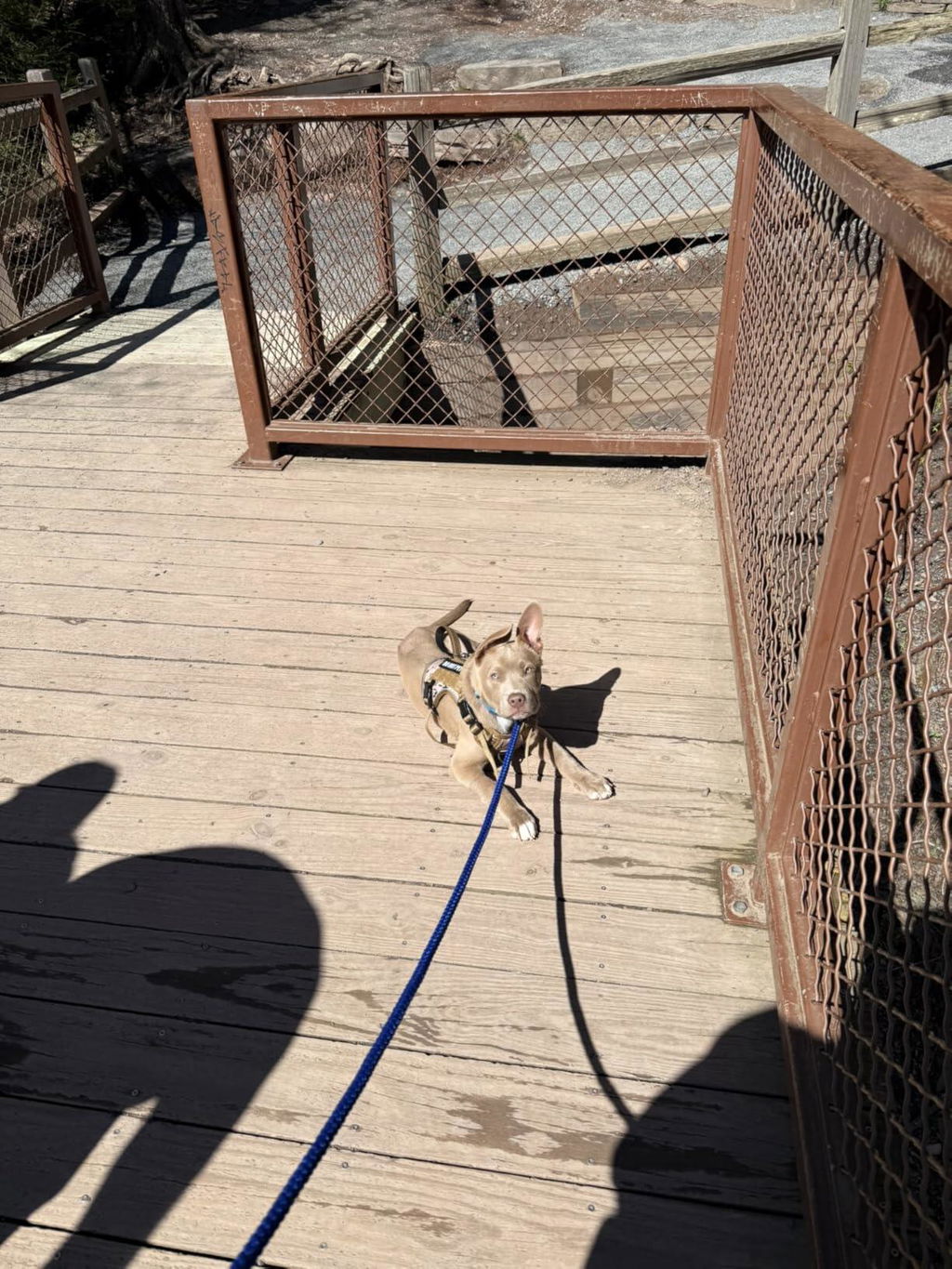
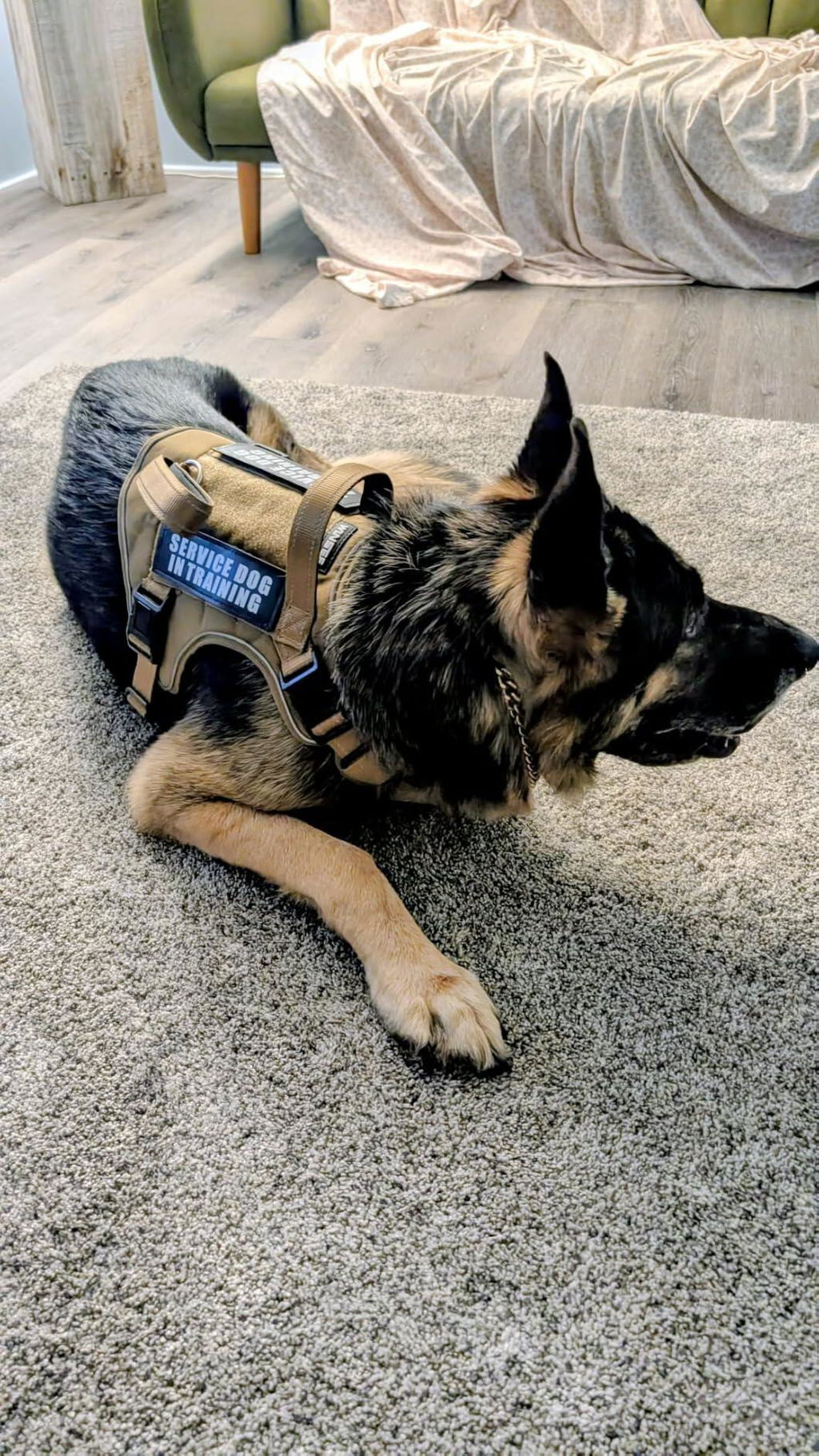
If you use a car tether, this is the piece it should attach to. A tether clipped to a collar concentrates the entire force of a sudden stop on your dog's neck — it is the most common mistake we see, and it's the reason we stock a harness at all.
Outside the car it does the ordinary job well: padded chest and back panels, a metal buckle rather than a plastic one, reflective trim for early and late walks, and a handle across the shoulders for the moments you need to steady your dog or lift them into a boot.
Specifications
-
Material: Polyester and nylon, padded
-
Buckle: Metal
-
Visibility: Reflective trim
-
Handle: Padded control handle across the back
-
Back panel: Hook-and-loop webbing for patches or a name tag — patches not included
-
Sizes: S, M, L, XL
-
Colours: Black, Grey Camo, Tan, Pink
-
Weight: 12.3 oz (350 g)
Size chart
These are the manufacturer's figures, in full.
| Size |
Neck girth |
Chest girth |
Belly length |
Back length |
Approx. weight |
| S |
14–17 in 34–43 cm |
19–30 in 48–76 cm |
6.5 in 16.5 cm |
8 in 20 cm |
18–35 lb |
| M |
16–21 in 40–53 cm |
22–33 in 55–84 cm |
7.3 in 18.5 cm |
10 in 25.4 cm |
30–50 lb |
| L |
20–28 in 50–71 cm |
24–37 in 61–94 cm |
8.5 in 21.6 cm |
11.5 in 29.2 cm |
45–80 lb |
| XL |
24–32 in 61–81 cm |
26–42 in 66–106 cm |
9.8 in 25 cm |
13 in 33 cm |
75–135 lb |
How to actually use that chart
You'll notice the ranges overlap a lot. A dog with a 26-inch chest technically falls inside all four sizes. That's because those numbers describe how far the straps adjust, not which size fits best — and it's why so many harnesses arrive wrong.
Measure the chest girth around the deepest part of the ribcage, just behind the front legs, with your dog standing and the tape snug but not tight. Then find your number in the table above and aim for the size where it sits near the middle of the range, not at either end. At the top of a range the straps are let all the way out and dig in; at the bottom you're left with loose webbing flapping.
On that basis, here's how we'd read it:
| Chest girth |
Size we'd order |
| Under 26 in |
S |
| 26–29 in |
M |
| 29–32 in |
L |
| Over 32 in |
XL |
This is our reading, not the manufacturer's — but it lines up with their weight column, which is a reasonable sanity check. If your measurement and your dog's weight point at different sizes, go with the chest measurement. Weight tells you nothing about ribcage shape.
Two more things worth checking. If your dog is long-backed — dachshund, corgi, basset — compare the back length column too, because the size that fits their chest may sit oddly along their spine. And if your dog is under about 18 lb, this isn't the harness for them; the S starts above that and we don't currently stock a smaller one. We'd rather say so than sell you a size that swims.
Still unsure? Email us the chest measurement and your dog's breed and we'll tell you which to order: pawsomehavenshopserve@gmail.com
What we're still checking
The supplier lists this as a no-pull harness. No-pull performance depends on there being a front chest attachment point positioned to turn the dog when they lean into the lead, and we haven't confirmed that on this model yet. So don't buy it as a no-pull harness until we've said so in writing here. Buy it as a well-padded harness with a control handle and a metal buckle, which is what we can currently stand behind.
What it isn't
This is not a crash-tested restraint, and neither is any car tether we sell. Together they keep your dog in their area during normal driving and off the front seats. Genuine collision protection means a crash-tested carrier or travel crate bought from someone who can show you the test certification.
Adjustable Pet Car Seat Belt — $14.99 · Why your dog slides forward when you brake →